

In this issue: a hidden history, a podcast announcement, a reading list, and three reasons to leave the house this summer.
Welcome to our new subscribers — we’re glad you’re here. Made In Appalachia is brought to you by Appalachia Book Company, an independent literary publisher based in far eastern Kentucky.
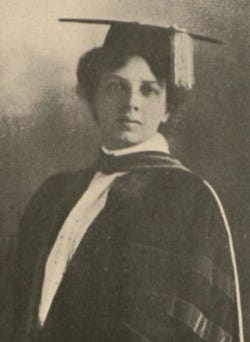
In the early 1900s, a Kentucky woman named Katherine Jackson French set out into the hills of eastern Kentucky to collect the old ballads — the murder songs, the love songs, the disaster songs — before they were lost. She was the second woman to earn a PhD from Columbia University — the first from south of the Mason-Dixon Line — and she saw these songs for what they were: women’s work, living and breathing, not relics of somewhere else.
She shaped what she collected into a manuscript and tried to publish it through Berea College. The book never came out. For nearly a hundred years, her name disappeared from the story.
In the meantime, an Englishman named Cecil Sharp arrived in Appalachia and became the name everyone knows. Sharp was looking for something specific — evidence of a living connection to English folk tradition. He found it, organized it, and published it. His framework became the lens through which the outside world understood Appalachian music for generations.
What kept French’s work from the world wasn’t simple neglect. It was professional rivalries, a field shaped by gender prejudice, and a publishing process that simply refused to follow through — all of it playing out over decades in what scholars now call the Ballad Wars.
French was looking for something different than Sharp was. Where he saw Appalachian ballads as evidence of a surviving English folk tradition — songs that proved a connection to the Old World — French saw them as women’s work. Songs carried in memory, passed between mothers and daughters, sung while hands were busy. Not relics of somewhere else, but a living practice that belonged to the people who sang them.
Think about what it would have meant for this region if her version of the story had been the one that traveled. A different framework. A different set of questions. Women at the center of it, not the margins.
French’s letters to Berea’s president are still in the archives — I read them myself in February. In them, she asks carefully, persistently, whether he intends to publish her work. And if not, could he please return the manuscript to her. She trusted him with something she’d spent years building, and she never got it back.
Elizabeth DiSavino, a musicologist who has spent years recovering French’s story, finally did what French couldn’t. Her book, Katherine Jackson French: Kentucky’s Forgotten Ballad Collector (University Press of Kentucky), includes the first-ever publication of French’s English-Scottish Ballads from the Hills of Kentucky — over a century after it should have appeared. It won the 2020 Kentucky History Award. I spoke with DiSavino in 2021, when we were just beginning work on The Storied Song, ABC’s ballad podcast. It was a fortuitous connection, and meant that I started thinking about ballads with the story of their collection in mind. Since then, I return to the idea of conduits, that there are people and cultural institutions that connect the past to the present. How we do that matters.
NEWS FROM ABC
The Storied Song is coming this month!
This June, Appalachia Book Company is releasing The Storied Song — a four-episode audio drama podcast adapting Appalachian ballads into radio plays. Each episode takes a different ballad and treats it as what it always was: a story. Tom Dula. The Wreck of the Old 97. The Farmer’s Curst Wife. Lord Bateman.
The plays were written by Jess Wells, Anne Gillespie, Diana Jean Skeen, and Ida Esmaeili, and recorded live at the Appalachian Center for the Arts in Pikeville, Kentucky. William Ritter sings the ballads. The series is directed by Michael McNulty of UVA–Wise and Pro-Art Association.
We’ll send a dedicated email when all four episodes drop on Spotify.
READING LIST
Get to know Sharyn McCrumb’s Ballad novels
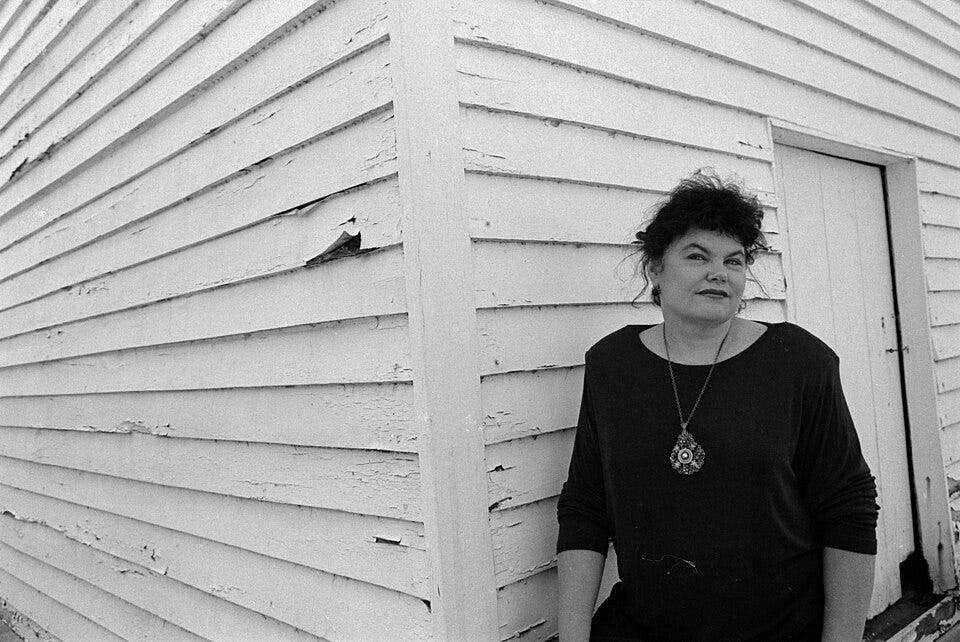
If the Katherine Jackson French story has you thinking about how ballads carry history — and how different the story looks depending on who’s telling it — there’s a novelist who has spent thirty years working that same territory.
Sharyn McCrumb’s Ballad series, set in the mountains of North Carolina and Tennessee, uses the old songs as the bones of her fiction. Each novel takes a piece of Appalachian history — a murder, a ghost, a community in crisis — and layers it against a contemporary story, the past and present running alongside each other until they collide. Two of them, The Ballad of Frankie Silver and She Walks These Hills, were New York Times bestsellers. The Ballad of Tom Dooley — yes, that Tom Dooley — tells the true story behind the most famous mountain ballad of all.
McCrumb grew up frustrated that the American South was primarily represented by plantation culture. The mountain people — their songs, their land, their long memories — were the story she wanted to tell. Twelve novels later, she’s still at it.
A few places to start — find the full list on our Bookshop.org page:
If Ever I Return, Pretty Peggy-O (1990) — the first in the series; a New York Times Notable Book
She Walks These Hills (1994) — widely considered the heart of the series
The Ballad of Frankie Silver (1998) — a true Appalachian murder case, told from both sides of a century
The Ballad of Tom Dooley (2011) — McCrumb reconstructs the real events behind the song, asking the question the ballad never answers: who actually killed Laura Foster?
We’ve compiled a list of McCrumb’s ballad books and more here. When you purchase through our Bookshop.org list, a portion of every sale comes back to support ABC’s work. Thank you.
PLANNING A VISIT THIS SUMMER? Here are some notable festivals to consider.

Virginia Highlands Festival
July 24–August 2 · Abingdon, Virginia · vahighlandsfestival.com
Now in its 77th year, the Virginia Highlands Festival is one of the Mountain South’s most expansive summer gatherings — ten days of music, arts, food, and literary programming in the heart of Southwest Virginia. For readers and writers, the headliner is Writers & Readers Day on Friday, July 31, featuring a keynote by Jeannette Walls, author of The Glass Castle, along with a full day of workshops on memoir, fiction, songwriting, and drama ($40 registration). Running the full festival: Read Local, a daily showcase of regional authors signing and selling books, and a Friends of the Library book sale at the Washington County Public Library — including a $5 bag day on August 2.
Appalachian String Band Music Festival (Clifftop)
July 29–August 2 · Clifftop, West Virginia · wvculture.org
The old-time music faithful have been gathering at Camp Washington Carver in the West Virginia highlands every summer since 1990. Five days of contests, concerts, workshops, square dances, and camping — the kind of event where the best music happens in the campsites after midnight. If you’ve never been, this is the year.
Appalachian Literary Arts Festival
August 28–30 · Morehead, Kentucky · appalachianliteraryartsfestival.com
Come meet the ABC team at this new event!
Brand new this year, hosted by Coffee Tree Books and the Rowan County Arts Center in Morehead. Three days of readings, workshops, panels, a book fair, music, and community arts events, with workshops from Bernard Clay (poetry), Gwenda Bond (fiction), Mandi Fugate Sheffel (nonfiction), and Willie Carver (cross-genre). It’s a new literary festival, and it’s starting right here in eastern Kentucky. We’ll be there!
This is a great read! I didn’t know this history and am thrilled to see Sharon McCrumb getting attention. I took a class on Appalachian Literature from her at Virginia Tech in the late 1980s and have been a fan ever since.
save the music! it’s wonderful!