

From the Editor
This month we’ve been thinking about a term that has become increasingly common in conversations about regional literature: Appalachian noir.
It’s an appealing label, but also an imprecise one. Too often it’s treated as an aesthetic—misty mountains, old mines, men with guns—rather than a literary tradition shaped by questions of power, poverty, land, and survival. We wanted to spend some time exploring what the term really means, hear from one of the writers working in the field, and recommend a few books for readers who want to dig deeper.
We’re also celebrating some exciting news about The Storied Song and sharing a few upcoming events where we’d love to meet you. —Natalie
What Is Appalachian Noir?
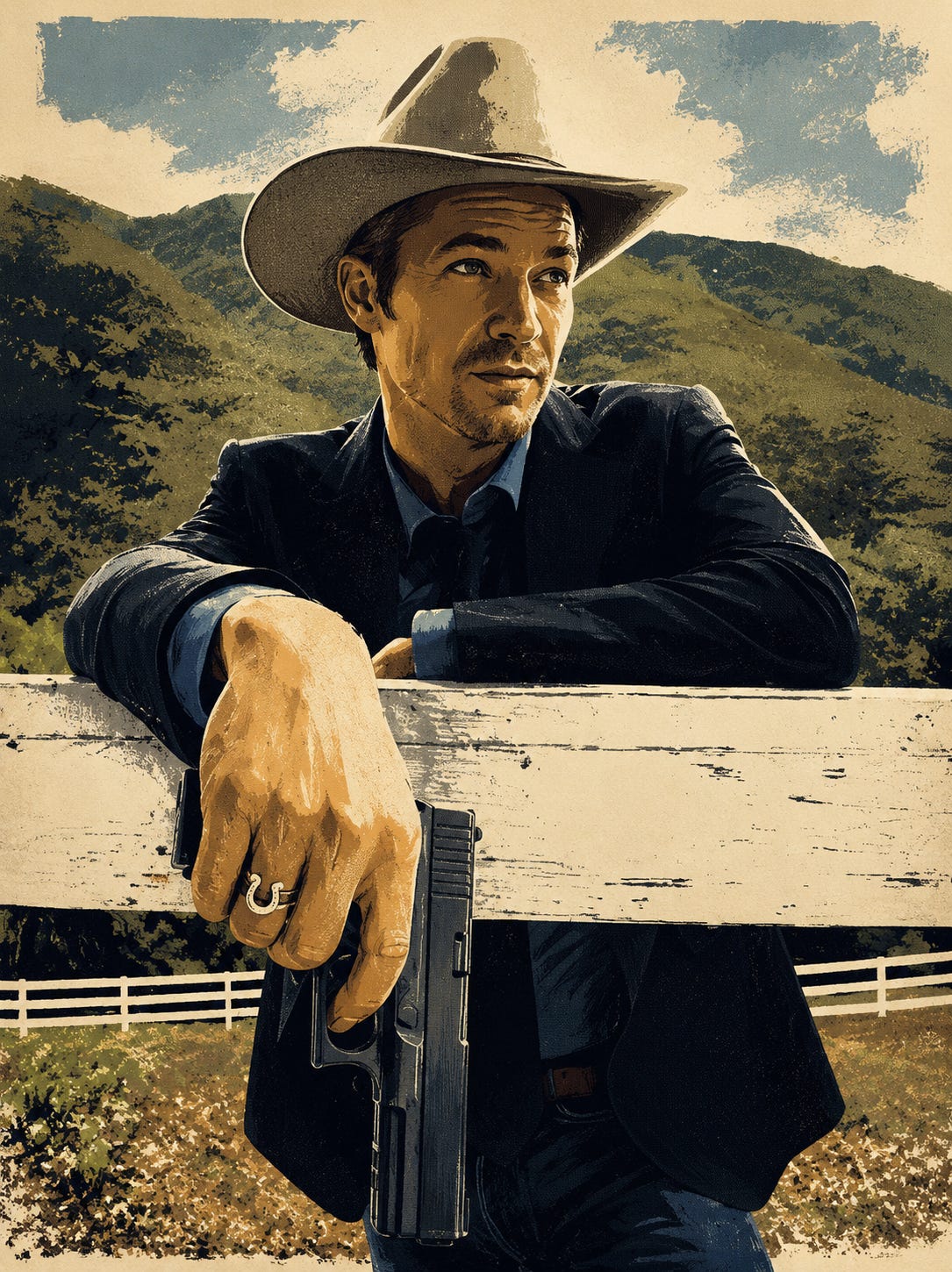
Have you seen Justified?
The FX series starring Timothy Olyphant as an eastern Kentucky lawman never quite worked for me. Olyphant was too polished, and his hat too Western, for the eastern Kentucky I knew to be convincing. That’s a failure on my part—an inability to suspend disbelief—and I want to be clear it’s my failure, not the show’s. Justified was popular, long-running, and genuinely well made. If you haven’t seen it, it’s worth watching.
But here’s something worth knowing.
Elmore Leonard, who wrote the source story “Fire in the Hole,” had no personal connection to Appalachia. Born in New Orleans and raised in Detroit—the city that earned him the nickname “the Dickens of Detroit”—Leonard reached for Harlan County because of what it represented: coal camps, feuds, isolation, and a place where disputes are settled outside the reach of institutions.
Those associations are powerful. They’re also the perspective of an outsider. And Justified inherited that perspective.
That distinction matters because it points toward what Appalachian noir actually is at its best—not a collection of atmospheric ingredients, but social commentary wearing the clothes of a crime novel.
The writers doing the most important work in this tradition aren’t borrowing Appalachia as a backdrop. They’re writing from within it.
Chris Offutt’s Mick Hardin novels, beginning with The Killing Hills, examine the lives of eastern Kentucky families with remarkable precision. Ron Rash’s fiction gives the landscape moral weight; the mountains become participants rather than scenery. David Joy pushes still further, refusing to let crime stand in for the conditions that produce it. His novels confront addiction, economic decline, and racial history without looking away.
The violence in these books isn’t decorative. It’s consequential. It’s rooted in place.
That’s what distinguishes Appalachian noir from the stereotype that often surrounds it.
I’m still discovering this body of work, and the deeper I read, the more convinced I become that Appalachian noir deserves to be understood as one of the most compelling literary traditions developing in contemporary American fiction.
From Appalachia Book Company
Louisville Public Media Features The Storied Song
We’re thrilled to share that Louisville Public Media recently featured The Storied Song, our audio drama series that transforms traditional Appalachian ballads into fully produced radio plays.
Reporter Andrew Henderson explored the history behind “The Wreck of the Old 97” and spoke with playwright Ann Gillespie about adapting the famous ballad into The Nightmare of the Old 97.
“Appalachian ballads are story songs—they’re among Appalachia’s earliest cultural exports.”
We’re grateful for the thoughtful coverage and hope you’ll take a listen if you haven’t yet.
Conversation
Chris Helvey on Appalachian Noir
Appalachian noir doesn’t exist in isolation. It has a close relative — Southern grit lit, sometimes called grit fiction — and the two traditions are easy to conflate. Both are set in rural America, both are unflinching about poverty and violence, and many of the same writers get claimed by both. Whether the distinction between them is meaningful or just a marketing category is a question worth asking.
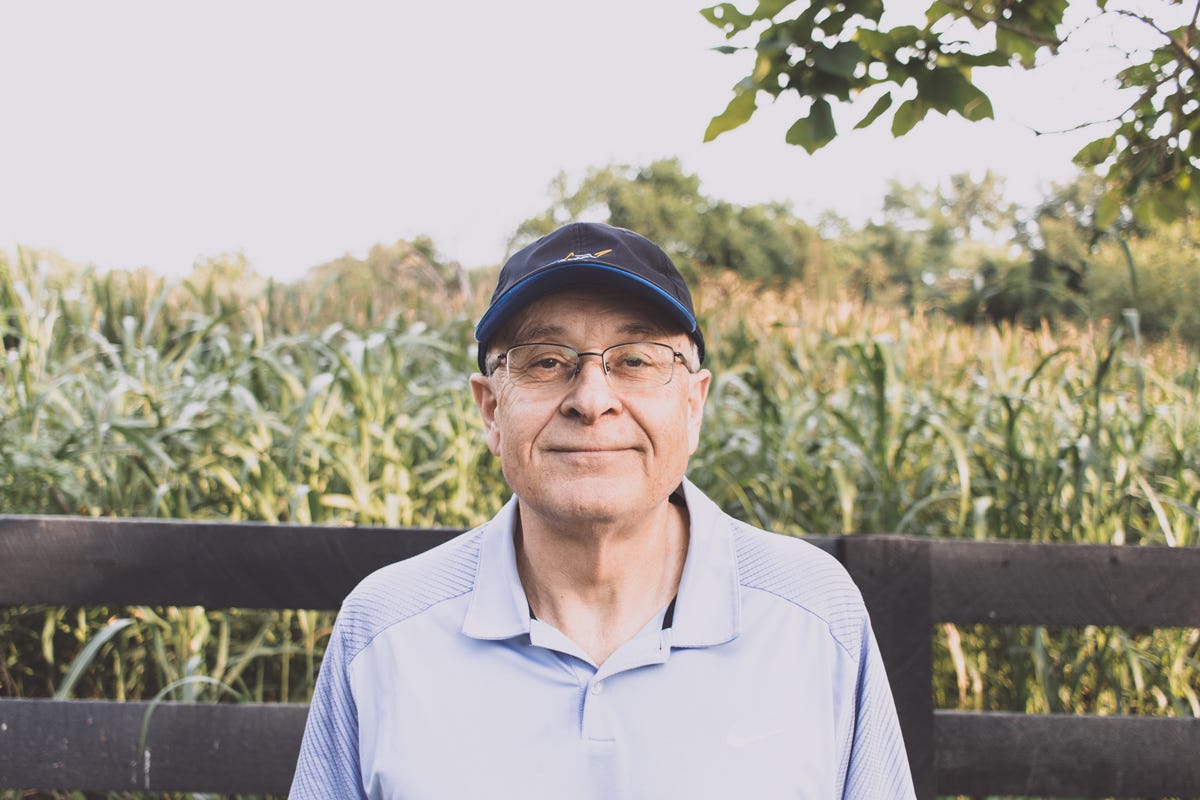
We put it to Chris Helvey — a founding member of the Bluegrass Writers Coalition, editor of Trajectory Journal, and the author of more than a dozen novels, whose chapbook Another Way of Coming Home is part of ABC’s Made In Appalachia series.
Is “Appalachian noir” a real and distinct genre, or a marketing category?
Appalachian noir is absolutely a real and distinct genre, and needs to be treated as serious literary territory. Gritty realism and unrestrained violence know no boundaries — they can be found across America at any time. Certainly, they are not limited to the back alleys of Chicago and New York. In fact, they have a special and unique home in the small towns and mountains of Appalachia. I frequently write novels with a noir flavor, including one I am working on now — The Yellow Hat — which tells the story of a badly scarred WWII veteran who returns to his Appalachian home only to find that several of his childhood friends are ready to brutalize, even kill, a young Black man who has crossed the social line they have drawn.
Where do you see the line between Appalachian noir and Southern grit lit? What does Appalachia specifically bring to crime fiction that the broader Southern tradition doesn’t?
Southern grit lit and Appalachian noir are first cousins, sharing many of the same writing techniques and styles and covering much of the same territory. It is the mountains and the people who live there that provide a certain unique flavor to Appalachia and Appalachian noir. Having spent many formative years in the hills and mountains of Kentucky, I recognize how a poor, rugged mountain man differs from a wealthy Deep South plantation owner. This distinction comes alive in two of my works set in Appalachia: my novel Afghan Love Potion and my chapbook Another Way of Coming Home, the latter of which was published by Appalachia Book Company.
Does noir, with its unflinching look at violence and desperation, risk repeating Appalachia’s long history of extraction narratives — the outsider peering in? How do you think about that tension when you’re writing?
While Appalachian noir can be written by either an insider revealing personal insights or an outsider looking in and observing, in my mind the insider has certain experiences, knowledge, and insights that no outsider, even one who has done significant research, can ever quite match. A person who has lived in a region such as Appalachia for a significant portion of their life carries experiences that lead to unique insights which can be effectively reflected in their writing. Having spent over a decade growing up in Whitley County, Kentucky, then working for years in eastern Kentucky, and having been a lifelong fan of noir fiction, I feel I bring valuable and unique insights to my Appalachian noir fiction.
Buy Another Way of Coming Home
Reading List
The Essential Appalachian Noir Canon (So Far)
If today’s essay piqued your curiosity, these are the books we’d recommend first.
David Joy, Where All Light Tends to Go — The place to begin. A debut about a young man coming of age inside his family’s meth trade in Jackson County, North Carolina, written with the kind of moral seriousness that makes you feel the weight of every bad decision. Joy’s The Line That Held Us is equally essential.
Chris Offutt, Country Dark — The leanest eastern Kentucky entry point. A Korean War veteran trying to hold his family together, with violence that feels inevitable rather than sensational. The Killing Hills, the first in his Mick Hardin series, is more genre-forward and equally good.
Ron Rash, The World Made Straight — Set in the mountains of western North Carolina, Rash's novel links a contemporary marijuana operation to the long shadow of the Civil War-era Shelton Laurel Massacre. Crime is only the surface story; beneath it lies a meditation on inherited violence, memory, and the ways history continues to shape Appalachian communities.
Wes Browne, They All Fall the Same — Winner of the 2025 Weatherford Award for Fiction, set in Jackson County, Kentucky. A strong recent entry from a practicing attorney who knows this world from the inside.
Wiley Cash, A Land More Kind Than Home — Set in western North Carolina, spare, morally serious, rooted in the specificity of place. Belongs in the same company as Offutt and Joy.
Then Read
Sheldon Lee Compton Especially his short fiction. Few writers capture eastern Kentucky with the compression and psychological darkness that Compton achieves.
Chris McGinley — Coal Black and Once These Hills McGinley deserves to be read alongside Offutt and Joy. His work explores the collision of family loyalty, economic hardship, and violence with an authenticity that feels distinctly Appalachian.
Chris Helvey — Another Way of Coming Home A compact introduction to Helvey’s vision of Appalachian noir. His fiction is rooted in firsthand knowledge of eastern Kentucky and reflects many of the themes discussed in this issue.
At the Edges of the Genre
These books aren’t quite Appalachian noir, but readers interested in the tradition will likely enjoy them.
All titles above are available through Bookshop.org. Purchases made through ABC’s Bookshop page support Appalachia Book Company directly.
Around Appalachia - Mark Your Calendars
Upcoming Events
Happy Hour at Tumbling Creek Cider Company — July 31, 2026
Heading to Virginia Highlands Festival’s Writers & Readers Day in Abingdon? Come find us afterward. Appalachia Book Company will be gathering informally at Tumbling Creek Cider Company from 4:30–6:00 PM — no agenda, no tickets, just good people and good cider. Whether you’re a reader, a writer, or just curious about what we do, you’re welcome at our table. We’ll have chapbooks to give away, but drinks are on your own tab. This is an unofficial gathering, unaffiliated with Virginia Highlands Festival.
Appalachian Literary Arts Festival — August 30, 2026
Find us at the Rowan County Arts Center Publisher & Vendor Market in Morehead, Kentucky. Appalachia Book Company will be tabling on the RCAC lawn from 10:00 AM–5:30 PM alongside publishers and vendors. Stop by to browse our books and chapbooks, meet the team, and pick up something made in Appalachia. The full festival weekend includes panels, keynotes, workshops, and live music. Full lineup at appalachianliteraryartsfestival.com.
WANA Annual Conference — October 16–17, 2026
The Writers Association of Northern Appalachia holds its annual conference this fall at Wheeling Park in Wheeling, West Virginia — a 406-acre park with a newly renovated conference center. The program includes more than 25 sessions on craft, publishing, and professional development, plus a new environmental writing track, an open mic at Esoterica, and a keynote from Amy Jo Burns, whose latest novel Wait for Me is a New York Times bestseller. Early bird registration is open now through August 15, with rates starting at $135 for WANA members and $25 for students.
Register at writersassociationofnorthernappalachia.org
I’d like to add Elaine Palencia to this mostly-boy list. a true Eastern Kentucky native who writes beautifully on many dark topics.
And Justified irked me because they couldn’t bother to capture the gorgeous local accent.
As an author from Appalachian Ohio, I can attest to there being a unique blend of addiction, violence, and crime in those hollers and hills.
My novella, Propitiation., is set in eastern Kentucky and deals with addiction, inherited violence, crime, and spiritual fracture all through the lens of povetry-stricken Appalachia.
Appalachian stories are unique and it feels like they're experiencing a resurgence with presses like Hub City, Regal House's Sour Mash Series, Appalachian Book Co. and novellas like Pineville Trace by Wes Blake.
I'm trying to do my part with my writing, too.